
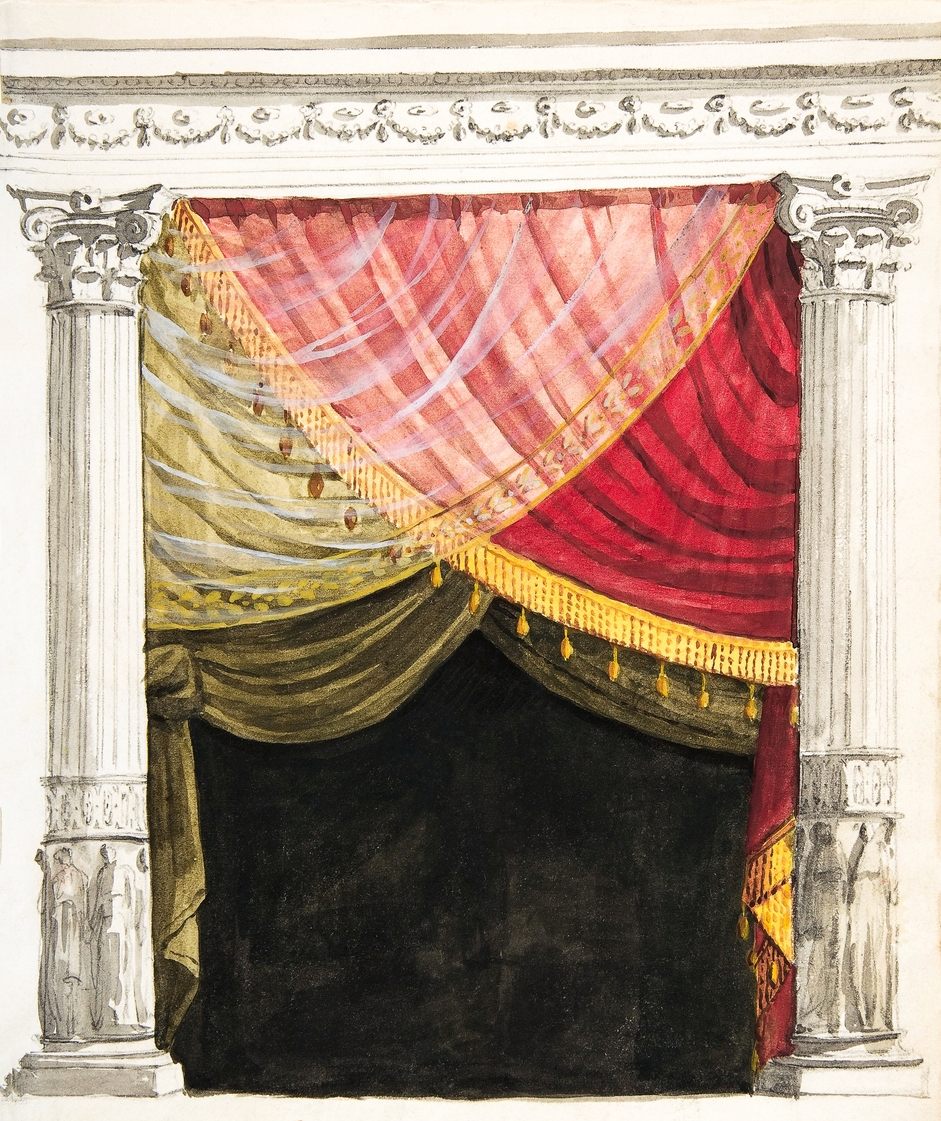
When the reader encounters a new scene, the curtain opens on … what? They don’t know until we tell them, or maybe they never know, depending on how badly we messed up. But we don’t want to bore the pants off them through over-description, either. What’s a writer to do?
The most important thing is to nail down the basics, the things the reader must know before they can absorb the rest of the scene. I have a mental checklist for this.
Oh, and everything I say about scene openings applies to chapter openings, only more so.
“First Things First” Checklist
In the first few sentences of the new scene, establish the following (listed in no particular order):
- Where are we?
- How much time has passed?
- Who’s here?
- What’s going on right now?
- Who’s the viewpoint character? (If your story has only one viewpoint character, you don’t have to do this except in the first chapter.)
- How did we get here?
This doesn’t take much space. For example, “Frank and I went to the library after lunch. As expected, we had it to ourselves.” (I didn’t establish a viewpoint character because the story has only one viewpoint character.)
Everything in the example falls into the “signposting” category. I’ll combine it with mood and artistry and various kinds of flourishes when the opportunity presents itself, but in this case I’ve spent fifteen words setting the scene only.
Establishing the Viewpoint Character
But what if the story has more than one viewpoint character? No problem. Readers are already used to the convention for changing viewpoints (or for demonstrating that we haven’t changed viewpoints): report the character’s name and something only they would know, such as a thought, emotion, or sensation:
“Bill woke up with a pounding headache and a mouth that tasted like old socks.”
Only Bill knows about his headache or the bad taste in his mouth, so he must be the viewpoint character.
That’s really all there is to it.
Technically, you don’t have to wait for a scene break to switch viewpoint characters. A paragraph break will do. But other considerations tend to favor scene breaks for the switch.
Readerology
But there’s more to bringing the reader up to speed on our new scene than the checklist. The checklist is necessary but not sufficient.
This brings us to readerology, a term I just now made up for the study of our readers and how they absorb our stories.
Different readers will put up with different amounts of confusion and uncertainty. Some will wait patiently even for basic information like “Where the heck are we?” or “Who the heck is talking?” Still, they can’t really grasp what’s going on until these are resolved, so the scene is half-launched and impact-deprived until the basics are taken care of. Other readers have shorter fuses and will go back and reread passages or skip ahead to hunt for the missing information. Either way, we’ve damaged their experience of the scene, especially if they can’t find the answer when they go looking for it. So we want to deal with the the basics before the readers start missing out.
This is true to some degree all the time, but a new scene starts on an empty stage, so it has higher stakes.
Mind you, readers are surprisingly patient when it comes to actual mysteries and love being intrigued and tantalized. But mysteries and omissions are two different things.
Speed of Visualization
Some readers have surprisingly sluggish powers of visualization. Characters are ghostly blobs or disembodied voices until we sketch them in, and the same goes for settings. Other readers have fervid imaginations, imagining all kinds of vivid details, incorrectly, if we give them the chance. A minute later, they can’t remember whether a detail is something we told them or something they made up themselves. Either way, once the truth slaps them in the face, they have to tear down their existing version and replace it with the correct one. Or not.
Unless we’re happy to lose squads and platoons and companies of readers from one end or the other, we need tune our descriptions so the slow visualizers have enough to sink their teeth into and the fast ones are kept on a short leash. I rely on the same techniques for both: sketching things in with quick but sure strokes.
Selective Focus
Using broad brushstrokes and selective focus are practically the same thing. Humans can take in the big picture at a glance but the details take more time and focus.
One of the best methods is to put something simple and familiar as the core of the description when you can. Take this description from Silver Buckshot:
It was a short walk from the top of the stairs to my suite: bedroom, sitting room, bathroom, and walk-in closet. My maid, Miss Parmalee, had a room across the hall. I banged on her door as I passed, but there was no answer. She wasn’t in my rooms, either. Private River checked my suite, declared it empty, and departed abruptly to rejoin Daddy.
Frank helped me to one of the sofas and said, “What next?”
This is about as minimalistic as I could manage. I’ve sketched in just enough to keep the ball rolling without confusion. The main thing is this: the reader already knows this is a fantasy thriller and the viewpoint character is a princess, but they also know that it’s set in the 1970s in a more or less modern and Americanized setting. A princess’ bedroom suite has electric lights and running water in the bathroom and won’t be something from The Arabian Nights or Hogwarts. Even the readers who visualize at lightning speed will stay in the right ballpark. Soon, though, certain specific elements will get closer attention: the sturdy door and its three heavy bolts, for instance. Our Young Heroes are having the kind of day where such things matter.
Is this description perhaps too terse for our slower visualizers? I’m not sure. But at least the description is in character. Neither Flavia (whose suite it is) nor anyone else ever focuses on the décor much, not even people seeing it for the first time. When Flavia encounters someplace new, she pays more attention.
Remember: things can remain blurry until someone focuses on them. No problem. But there has to be something there to be blurry. No empty voids.
Add Detail Without Contradiction
Another trick is to never describe something in one way, then contradict myself later. Frank helps Flavia to one of the couches. The second couch will be come into play eventually, so I didn’t want to utter even a tiny misdirection by saying “the couch.” This is relevant to scene openings since it’s where we see many things for the first time.
Some readers are quite sensitive to real and apparent contradictions, even small ones. Me, for instance. I’ll assume I misread something, maybe this passage, maybe an earlier one, and it’ll bug me. I may backtrack and read several paragraphs over again, which detracts from the scene. So in your own stories, when you zoom in on something, it should add new details without invalidating old ones (unless the new information comes as a surprise to the characters as well). A lot of authors are surprisingly sloppy: they don’t seem to notice or mind their own inconsistencies, making them untrustworthy and mumbly to some degree. Don’t do that: be precise even in your generalizations.
Repetition
Part of readerology is knowing when to repeat yourself, when to repeat yourself. Some readers are dealing with distractions and interruptions. Others may set the story down for a few days before they pick it up again. We want to keep them on track, though of course without becoming tedious.
Scenes often open on a place we’ve been before, but not recently, or with characters we haven’t seen in a while. Reminders help.
Here are a few instances that came up while I was working on Silver Buckshot:
- One character (Louisa) is referred to by her nickname (Spike) by about half the characters, but not the other half. I remind the reader in different ways that Louisa and Spike are one and the same until I’m confident the readers get the message.
- If a character reappears after along absence, I remind the reader who they are. (If they’re around more continuously, I don’t.)
- It’s also helpful to make characters distinct and vivid enough that if one part of the package doesn’t ring a bell, another does.
- If they have distinct behaviors (interests, modes of speech, etc.) or a distinctive appearance, these help—but only if you mention them again later, not just during their first appearance.
- For example, if the palace intelligence officer rarely says more than a line or two before returning to an intelligence-related topic, the readers won’t confuse him with anyone else even if they’ve forgotten his name.
- I’m often guilty of relying too much on a vivid first impression and not reinforcing it later. To the extent that I actually get away with it, it’s because I use small casts.
- Your characters are much more distinct to you than to your readers. At least, they are until you even things up. Go to it.
Other Opportunities With Scene Openings
A new scene is an opportunity to change the mood, the pace, or the subject. A new scene can provide comic relief (or tragic relief), a breathing space, a seeming digression, or almost anything, really. The nuts-and-bolts stuff I’ve said above in no way invalidates or diminishes all these other, more creative elements.