Robert Plamondon’s Fiction

I put my fiction writing tips in this blog and also talk about my stories.

I have two complete novels out: One Survivor (a space opera) and Silver Buckshot (a romantic urban fantasy thriller with extra banter), and others in the works. This site talks about my stories and also about fiction writing in general.

My fiction writing tips are collected here.

Silver Buckshot: Magic, Mystery, and a Most Aggravating Boyfriend

Silver Buckshot is available in paperback and Kindle.

Thirteen-year-old Princess Flavia has endured a lot recently. Polio crippled her legs and killed her mother, her father is sunk in grief, and her servants veer between negligence and cruelty. She takes refuge in her books and never complains.

Read more

What Did Chekhov Really Say About “Show, Don’t Tell”?

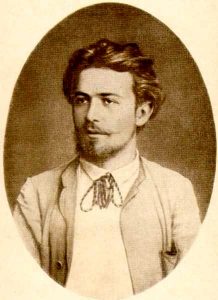
Photo of Anton Chekhov

Don’t tell me the moon is shining; show me the glint of light on broken glass.
—Allegedly by Chekhov (but not really)

Chekhov never said this. He especially didn’t say “don’t tell me the moon is shining.” That wouldn’t have made sense to him.

This misunderstanding comes from a letter he wrote to his brother Alexander in May 10, 1886, which is known mostly from an ambiguous excerpt:

For instance, you will succeed in depicting a moonlit night if you write that on the mill dam a piece of glass from a broken bottle flashed like a bright star and the black shadow of a dog or wolf rolled along like a ball and so forth. Nature comes alive if you’re
not squeamish about comparing natural phenomena to human actions.

—Translation by Cathy Popkin, in her edition of Anton Chekhov’s Collected Stories (New York: W. W. Norton, 2014), p. 517.

Read more

Using Third-Person Objective Right: The Maltese Falcon

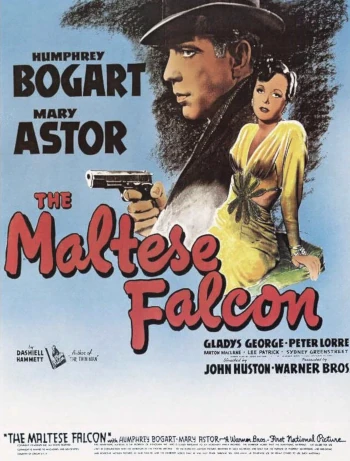
For some reason, perhaps a hatred of humanity, when people talk about third-person objective (“fly on the wall”) narration, they always lead with Hemingway’s Hills Like White Elephants. This is a lousy story. It reads more like an exercise, not one of Hemingway’s better efforts at all, so we’ve started off on the wrong foot.
Worse, it’s almost entirely dialog. You can tell a story that’s mostly dialog in any narrative mode, and it’ll come out the same. It’s not a showcase of third-person objective.

We’ll use a better example.

Read more

Do You Need a First-Line Hook?

Not that kind of hook!

This question came up on Reddit this morning. Here’s my answer:

Like most writing advice, “You have to have a first-line hook” is wisdom-adjacent while managing to be both wrong and imprecise. Does “first line” mean the first printed line or the first sentence? It’s wrong either way, but pointless ambiguity is a hallmark of oft-repeated writing advice.

First-line hooks are great. I love them to pieces. But they’re not essential; let’s not overvalue them.

Let’s reject the “line” part first. The position of the first line break on the printed page is irrelevant. Typography isn’t destiny.

How about the first sentence? I sometimes read a book for the first time and its opening sentence grabs me hard enough that I remember it years later, well enough to quote an approximation of it. This makes the story as a whole more vivid and easier to talk about. And, of course, I have no choice but to keep reading.  I benefit; the author benefits.

A vivid and memorable first sentence is a good thing to have. Does it also have to take the form of a hook? No. “Call me Ishmael” isn’t hooky in the usual sense at all, not in the way that, “I was riding down the old high road and came upon a ventriloquist and his dummy dangling from a tree” is.

Read more

One Survivor

Buy on Amazon 
Or buy elsewhere.

by Robert Plamondon
Norton Creek Press, 258 pages, ISBN 0981928447. 

Robert Plamondon’s novel is the kind of old-school SF adventure you love, with competent, strong-willed characters, believable technology, fast-paced action, humor, mystery, murder, betrayal, and a touch of the supernatural, all set against the backdrop of the ruined Terran Empire.

One Survivor will remind you of Heinlein’s early work, but with a depth of background more like Jack Vance. It pits fifteen-year-old Beverly di Mendoza against her parents’ murderers, on a backward planet whose inhabitants owe her nothing. With the help of two other teenagers and their battered space ship, Beverly survives the initial onslaughts and soon moves to the offensive.

Read more